

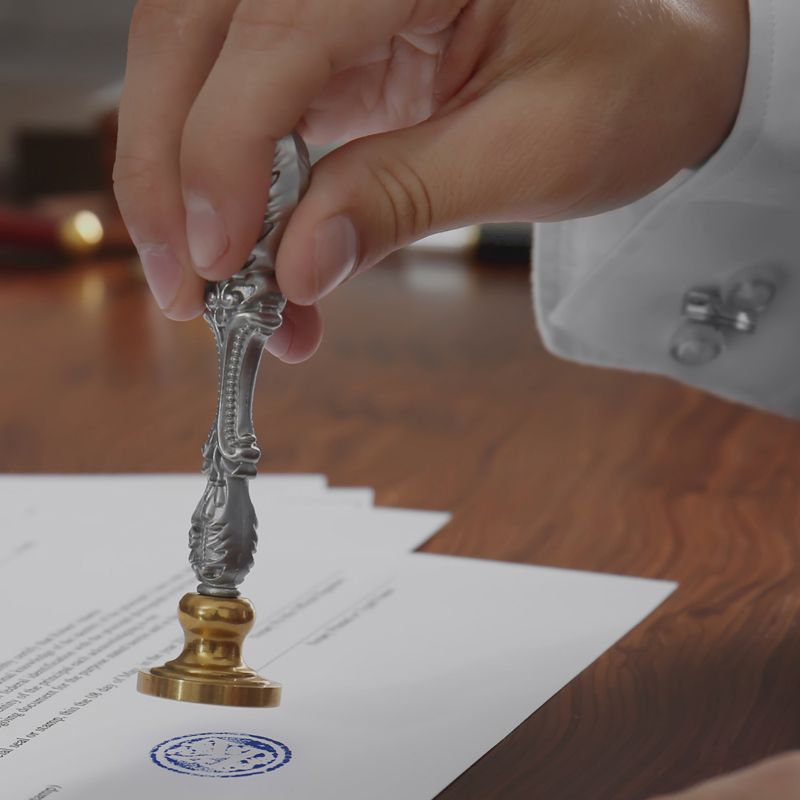

Probate: Estate Administration
If you have recently lost a loved one and they left a will, then their estate will need to be administered to give effect to their wishes and to settle all outstanding taxation obligations.
Our Private Client team are experts in Estate Administration and can help you with much of the stress and complexity during what is a very difficult time for both family and friends. We can also offer a ‘Grant only’ service, leaving you to administer the estate.
Our Private Client Department has over 65 years’ of collective experience delivering high quality work in all matters relating to Wills, Powers of Attorney and Estate Administration. The team has particular expertise in high value estates.
Each member of the team will work individually on your matter with you to ensure the best possible outcome, identify the Executors or Administrators and the beneficiaries and will obtain all relevant documents required to make the application for a Grant of Probate.
There is overall supervision of the department by Tony Morcowitz.
As part of our service to you we can, depending on your instructions to us:-
- Arrange an initial meeting with you to discuss the Will, or intestacy, Grant and/or Estate Administration process.
- Register the death with all organisations relevant to the deceased.
- Obtain values of assets and debts.
- Complete Inheritance Tax forms, arrange payment of Inheritance Tax and liaise with HMRC Capital Taxes Office if relevant.
- Prepare Executors’ Oath or Statement of Truth.
- Apply for and obtain Grant of Probate – this is an official document needed to administer the Estate and it is issued by a section of the court known as the Probate Registry.
- Register probate with all organisations including those holding assets.
- Collect assets and pay all estate debts.
- Ensure income and capital gains tax compliance is met.
- Produce final accounts.
- Distribute legacies to beneficiaries in accordance with the Will and analyse the most tax-efficient way of distribution.
- We will liaise with the Executors and main beneficiaries throughout the entire process.
Intestacy
If your loved one has left no Will this is known as dying intestate. The process of administering an intestate estate can be more complicated. Our team has the expertise to advise you and help you with every step of the process.
How long will this take?
Please see further and full details below. On average, estate administration can take between three to eighteen months depending on the value and complexity of the estate, the obtaining of documentation, the responses of various institutions including HMRC, banks and the Probate Registry
However, the law gives Executors or Administrators up to 18 months to complete and finalise the administration of the Estate. Please note there are instances where the administration can go beyond the 18 month period – this can be where there are foreign assets, missing beneficiaries, a claim against the estate or where there is family dispute.
Wills
Do I really need a will?
Everyone should have a Will in place, no matter their age.
Did you know that:
Marriage
When you marry, any existing will is automatically revoked (cancelled) and becomes no longer valid?
Divorce or annulment
If your marriage is ended by a court order your will is not invalid so that if you have left a legacy to your former spouse this will still take effect as if he or she had died on the date your decree became absolute?
This could mean that the gift falls back into what is known as ‘the residue’ of your estate and will pass to the other beneficiaries. So that if you had left everything to him or her, then the effect is as if you had died intestate.
Further, if you had appointed your spouse as an executor or trustee, your will still takes effect as if he or she had died on the date the decree became absolute.
So, a will is very important if you;
- own a property
- are single
- have children and wish to appoint guardians
- are married, marry or re-marry or enter into a civil partnership
- divorced or in second relationships
- you have savings, investments or a business.
Without a Will, your estate may not pass in accordance with your wishes; Potentially, it may even mean in a worst-case scenario, that your estate passes to the Crown. You spend your life working hard to provide for yourself and your loved ones so it will be important that you are able to ensure that you can plan effectively for your estate.
Making a Will helps ensure your estate passes according to your wishes, and your estate makes best possible use of Inheritance Tax reliefs available.
How long will this take?
On average, a straightforward Will can take up to 21 days and a complex will up to 28 days, including, but not exclusively, obtaining of information and instructions from you. However, should you require urgent drafting then prompt attention will be given.
Home visits can also be arranged.
LPA/EPA–(Enduring and) Lasting Powers of Attorney
Few of us like to think of a time where we become unable to deal with our affairs, such as managing bank accounts or selling or buying a home or making a decision about long time care. The reality, however, is that whilst you are still physically and mentally capable, you should consider making a Lasting Power of Attorney now, entrusting someone with the authority to make decisions on your behalf in the event that you become incapable of making those decisions in the future.
A Lasting Power of Attorney is a legal document that can be made and registered now, but need not come into use until, and if, it is actually needed.
The consequence of not having a Lasting Power of Attorney in place if someone loses mental capacity and can no longer manage their affairs, is that family and loved ones would have no alternative but to make an expensive application to the Court of Protection. This can often take some time to secure.
Enduring Powers of Attorney
Although these were replaced by Lasting Powers of Attorney, you can still use and register an Enduring Power if it was made before October 2007. We can assist you with this process.
Court of Protection
If you need to be able to assist someone who unfortunately lacks the capacity to manage their affairs, an application to the Court of Protection is necessary. The Court will appoint Deputies to be responsible for decisions about the vulnerable person’s welfare and finances. Our team at Chase Ports & Ridges Law Firm can assist with this complex process and talk you through your duties if appointed as Deputy.
How long will this take?
LPA: Up to 3 months including, but not exclusively, obtaining of documentation from third parties including your Attorneys and/or medical professionals and/or the Office of the Public Guardian (who will take 3 to 6 weeks to handle your matter).
Court of Protection: Between 6 to 12 months including, but not exclusively, Court or agreed stays, obtaining of documentation from relevant parties. This time estimate will be, in part, dependent upon the speed with which the Court handles the matter.
